A Maker's Struggle: Hardware vs Software in the AI Era
While I was on the Chinese factory floor, in sweltering heat, checking the last component that had arrived, a thought came to mind. What comes next?
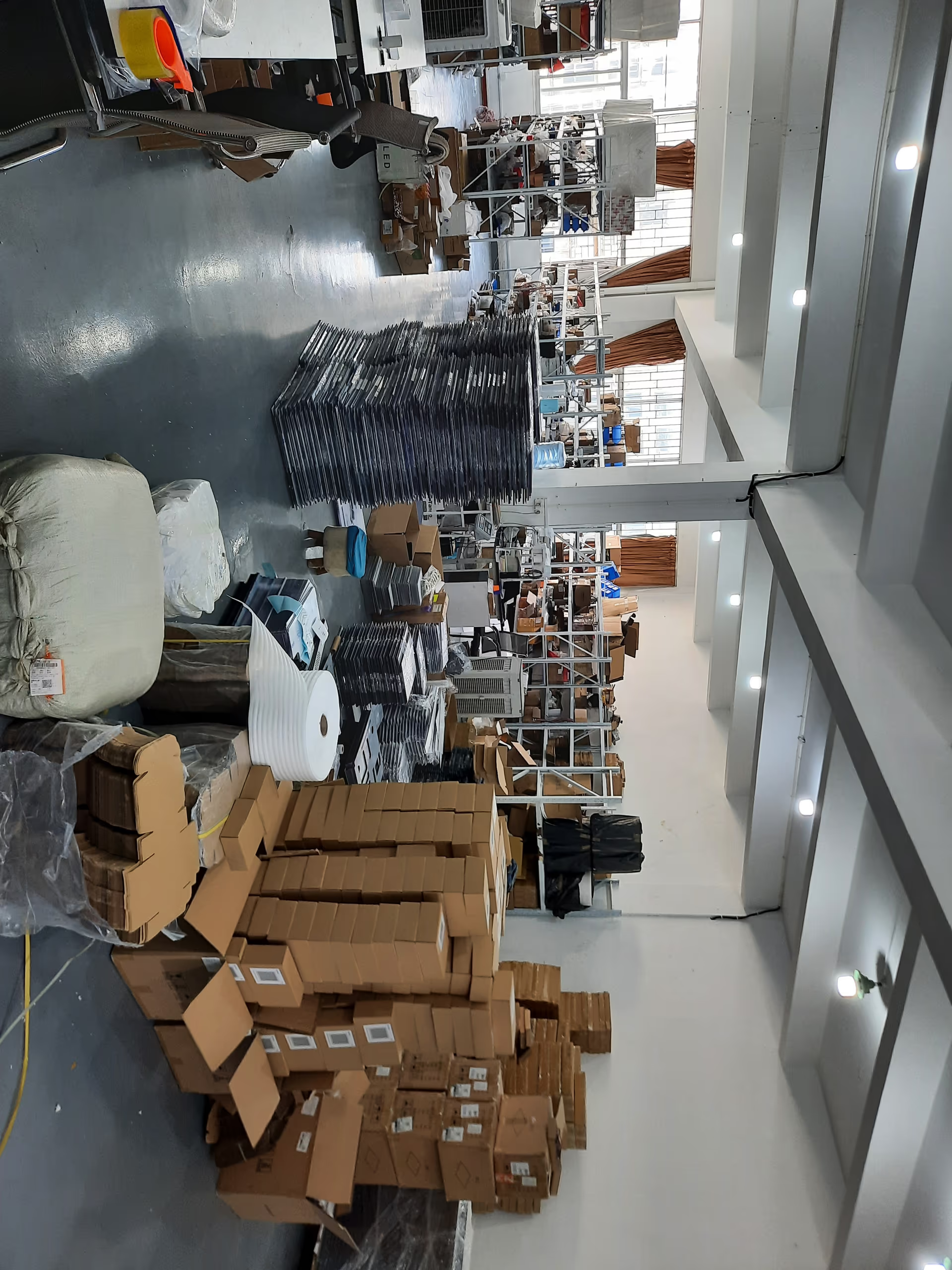
Two weeks on that floor, every day from 8 to 8.
Everyone has this thought when a phase of their life is closing and the next one is still blurry. Maybe it's choosing a university, or a job offer. In my case it was what I should dedicate my time to, and what gets me excited about my future.
For a long time that answer would have been simple: a hardware product. In 2026, after having done one, I'm not so sure anymore.
Let's take a couple of steps back. Who am I? I'm a maker, a tinkerer, someone who works with his hands to create something in the real world. I've always been this way, from sand castles to chunks of wood to eventually producing real products. There is an unreal satisfaction in seeing something go from a computer screen to the real world.
In my day-to-day life I encounter problems which eventually become ideas for businesses I could work on, solutions I could provide to some end customer. I have just finished almost all of the biggest projects that have taken my attention outside of uni in the past year and a bit, so my sole focus now is understanding my mistakes and my successes, and using them to choose a new path.
I'm standing here, at a crossroads between many ideas. I could jump into one of the many software streams that are swirling at high speeds, or go on one of those rocky hikes with a hardware product. They both seem like great options, but what is the real differentiator? Speed.
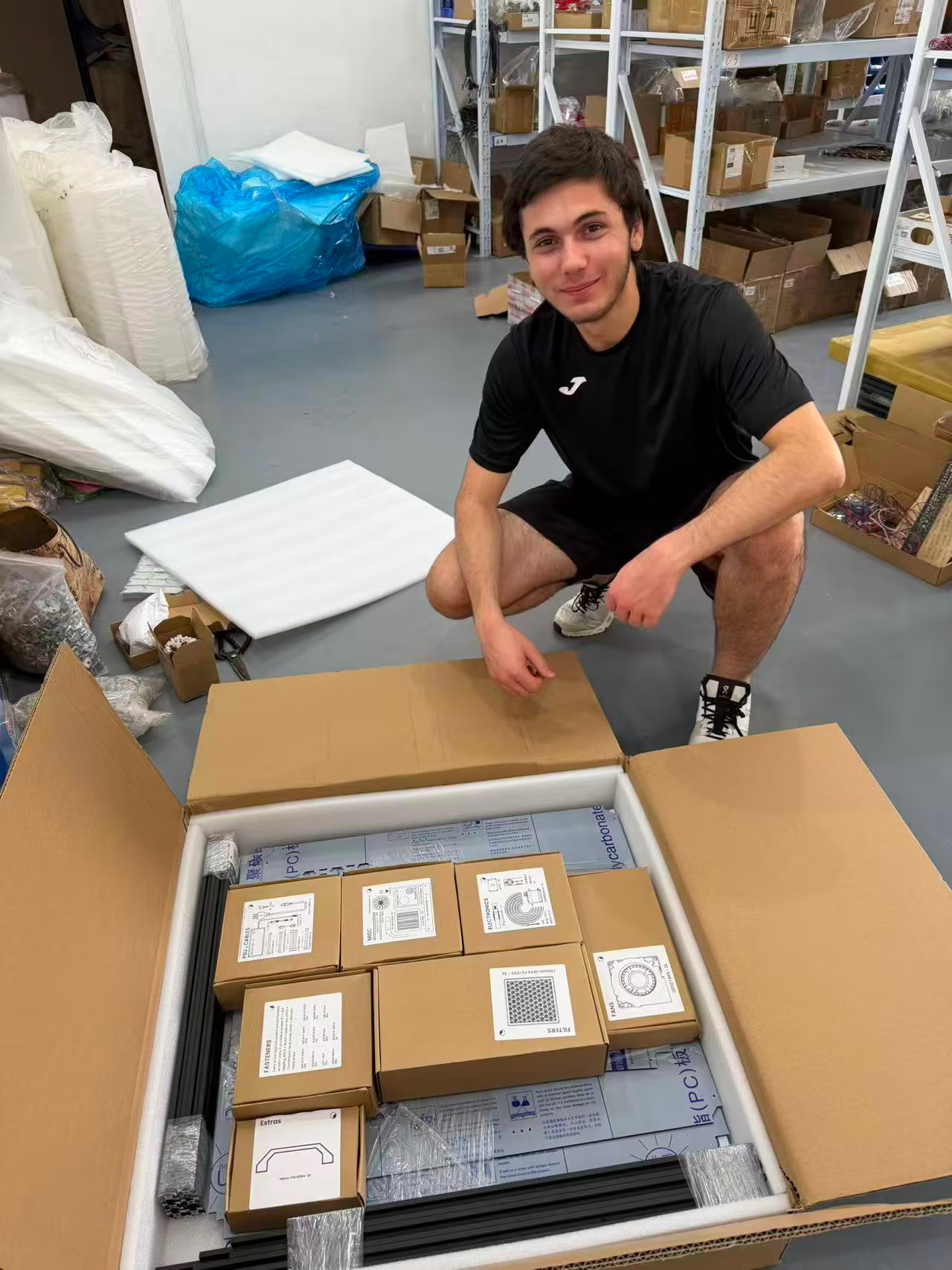
The end of the slow loop: stock, finally.
I have learned the hard way that hardware iteration is slow, especially if you don't live in China, which at the moment I don't, because of my degree. And has it improved with AI? Maybe. Looking back at what I have done, I can see some sections of it being sped up:
- software for physical products (Arduino code, STM32 code)
- documentation
- organization of orders and things to do, the boring tasks which need to be done when dealing with real products in general
- decision making and parts selection
Take a look at that list. Think about how long those tasks took before. Do they really impact the development time of hardware? I'll tell you: yes they do, but not significantly. What changes is just how much you can achieve in the same time. Getting a sample of a machined metal piece still takes the same amount of time, but the things you can do on the software side in the meantime have drastically improved.
Why limit yourself to creating simple and outdated programs for hardware products when now you can actually make everything polished, without impacting development time?
So time has not changed, but quality has increased.
Now what about software? I used to write sites in HTML and CSS with Bootstrap in high school, then I discovered WordPress, then AI came along, which I don't have to tell you has changed everything.
What I can tell you is that writing the complex tool that solves a niche problem with a real market is now possible, and it can be done quickly. Developing in-house tools to automate slow-moving old industries is now easy. I am no expert coder by any means, I don't drink Rust and eat assembly, but the playing field has been leveled. So it's easier than ever to jump in, not only for you, but for anyone. Execution is key. Finding the right clients is key. Having a real moat is key. Otherwise, in the same way that the software river has been accelerating your idea's development, it can spit you right out and leave you with nothing.
I believe I have illustrated the dilemma: go for something with quick development times and almost instant feedback, which has higher competition, or go for something harder and longer to produce, with less competition.
Profits can be made either way, so what do you choose? The obvious answer is what you like the most. The only real way to be the best at something is to be more obsessed than anyone else developing the same idea.
What about a more nuanced answer? I'm 20, without much experience and eager to learn new things. What could be my goals?
- Maximize learning, so fail as fast as possible.
This exposes you to new people, new sectors, new ideas. So unless you have some insane insight or insatiable passion, I would say at least give software a shot, but try to do it differently from the rest.
Don't build a budgeting app. Try to build something that forces you to interact with people who can teach you about a sector. Try to solve a niche problem. Find inefficiencies that could not be solved before and are now simpler to fix.
Or, if you're crazy enough, build both. Build software and hardware tied together. One brings immediate learning, the other a moat which is harder to copy and iterate on.
What will I do? Honestly I am not sure yet, but you'll find out.